The community that is most vocal in warning about the Islamification of the USA is the “war on terror” veterans’ community. That’s because we saw things with our own eyes that are hard for others to believe:
1. The treatment of women as chattel property. Goats are treated better than daughters—no exaggeration.
2. Widespread pedophilia and bestiality while at the same time people we call “LGBTQ+” in the West are subject to barbaric methods of execution.
3. An absolute lack of freedom of religion.
4. Wanton disregard for human life.
5. Insanely paranoid antisemitism straight out of The Protocols of the Elders of Zion.
6. Wholly corrupt governments; bribery as a uniform standard.
7. Tribalism to an extreme: tribe trumps truth and justice, always.
8. In the Gulf Arab countries, “Third Country Nationals” from poor Muslim countries engaged in menial labor and literally treated as slaves.
9. Absolute confidence that Islam will violently conquer the rest of the world, and a belief that this is just and proper.
10. Acceptance of the idea that lying can be and is necessary and proper.
Imagine taking a day off from work in a future without capitalism.
It might not feel as badly needed as it does now. You enjoy your work; it’s interesting to you, and you’re well trained for it. You work as much as you are able and no more than needed, and you would control your own labor and see it going to good use. It’s not just a job to pay the bills.
Speaking of bills: you don’t really have them anymore(!!)
You have no debt. You don’t need health insurance. You don’t pay a mortgage or have a landlord, because comfortable housing is a human right. Your retirement is publicly funded. Food, education, energy, medicine, and transportation aren’t for-profit businesses; they are common goods and utilities.
OK, enough about bills. What do you do on your day off? Maybe in the morning, you walk your kids to school, run errands, or go to a doctor’s appointment. In the afternoon, you might play a sport, practice a new skill, read, plan a trip. In the evening, you could meet up with friends or family and eat together, maybe go to the movies or down to the park.
These are all familiar, everyday activities. A socialist day off could be like any good day now. But what if you were free to spend your time how you like without worrying about cost or dreading going back to work? What if you didn’t have to think about paying rent or loans at the end of the month, or saving for college, or affording groceries?
It’s been said that it’s easier to imagine the end of the world than it is to imagine the end of capitalism. But just because it isn’t easy to imagine now doesn’t mean we shouldn’t try to make it happen.
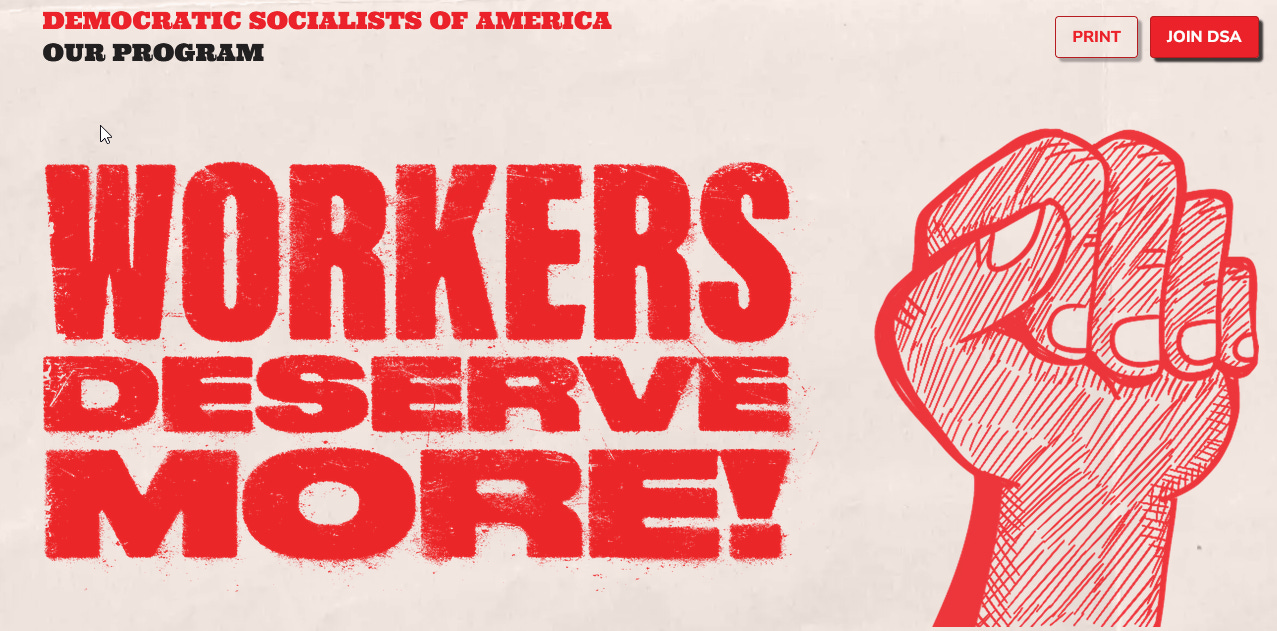
Workers deserve more.
Speaking of bills: you don’t really have them anymore.
You have no debt.
You don’t need health insurance.
You don’t pay a mortgage or have a landlord, because comfortable housing is a human right.
Your retirement is publicly funded.
Food, education, energy, medicine, and transportation aren’t for-profit businesses; they are common goods and utilities.
Guarantee universal healthcare at no cost to individuals,
including complete access to reproductive and gender-affirming care.
Expand healthcare access and quality by investing in new public hospitals and clinics.
Make all medical education and training public and free.
FREEDOM TO FLOURISH
Expand public resources to support recreation, learning, and social spaces accessible to all.
Establish paid family leave for all workers,
a 32 hour work week with full pay and benefits,
and a living minimum wage.
Provide free, quality public education from pre-K to college and cancel all student debt.
HEALTHCARE FOR ALL
Guarantee universal healthcare at no cost to individuals, including complete access to reproductive and gender-affirming care.
Expand healthcare access and quality by investing in new public hospitals and clinics.
Make all medical education and training public and free.
HOUSING FOR ALL
Housing is a human right.
Build new, publicly-owned social housing,
strictly regulate investment properties,
establish universal rent control,
and guarantee right to counsel for all tenants.
FINISH RECONSTRUCTION
End the legacies of slavery and colonialism.
Reinforce anti-discrimination laws.
Honor all treaties and tribal sovereignty.
Enact reparations and massively invest in good jobs, quality housing and infrastructure in neglected minority communities.
END MASS INCARCERATION AND POLICE IMMUNITY
Demilitarize police departments,
disempower police unions,
and redirect funding to public services as steps towards fully abolishing the police and prison system which protects the rich and jails the poor.
Treat drug addiction and mental illness as health issues, not crimes.
End qualified immunity and empower civilian oversight bodies with real authority over the police.
FEMINISM FOR ALL
Socialist feminism fights for queer liberation and the freedoms of all working class women.
Stop gender violence and end policies that oppress bodily autonomy and intimate life, including patriarchal restrictions on abortion, childbirth and childraising, gender expression and transition, marriage, and divorce.
Ban sex discrimination and ensure fair compensation and support for all forms of labor, including care work.
GREEN NEW DEAL
Workers must lead our democratic transition to a green future.
Pass a federal jobs guarantee.
Implement massive investment in sustainable, publicly owned energy and transit infrastructure.
Phase out the use of fossil fuels.
Reclaim and repair our earth's resources for all.
Doug here: So wonderful sounding!! It’s Paradise! Paid with OTHER PEOPLE’S MONEY?
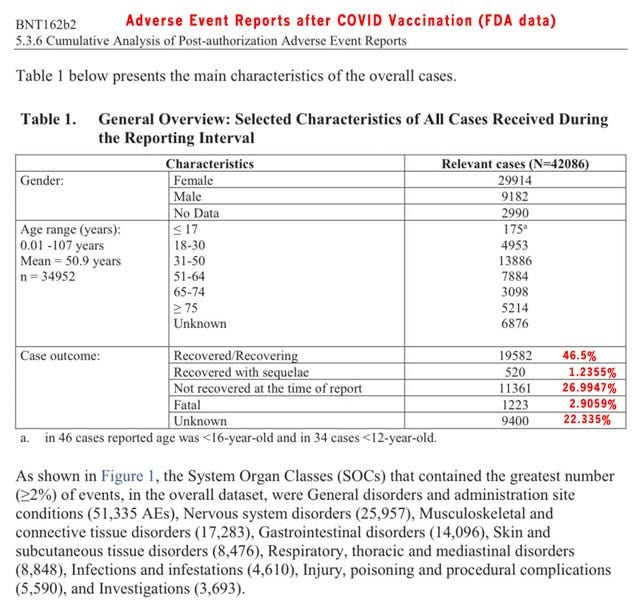
The reason was that an outrageous 1200 people died in the first 3 months of the covid “vaccine” regimen.
This is SO BAD THAT THE ENTIRE PROJECT SHOULD HAVE STOPPED IMMEDIATELY
on just this information alone! Instead it only came out later as a
result of a FOIA mandate from a judge. Vaccine trials are usually cancel if even one or two people die! Instead Pfizer wanted this information hidden for 70 YEARS!
Real Heart Concerns in Young People from Covid “Vaccines” —-Denied forever by media and everyone else
Young
people were not seriously threatened by COVID itself. Very few young
people died from Covid. That was know almost from the beginning. BUT
THEY HAD TO BE INJECTED WITH THE JANKY “PSEUDO-VACCINE'! Only later did
we find out that the “Vaccine” was more threatening to the health of
young people than Covid itself.
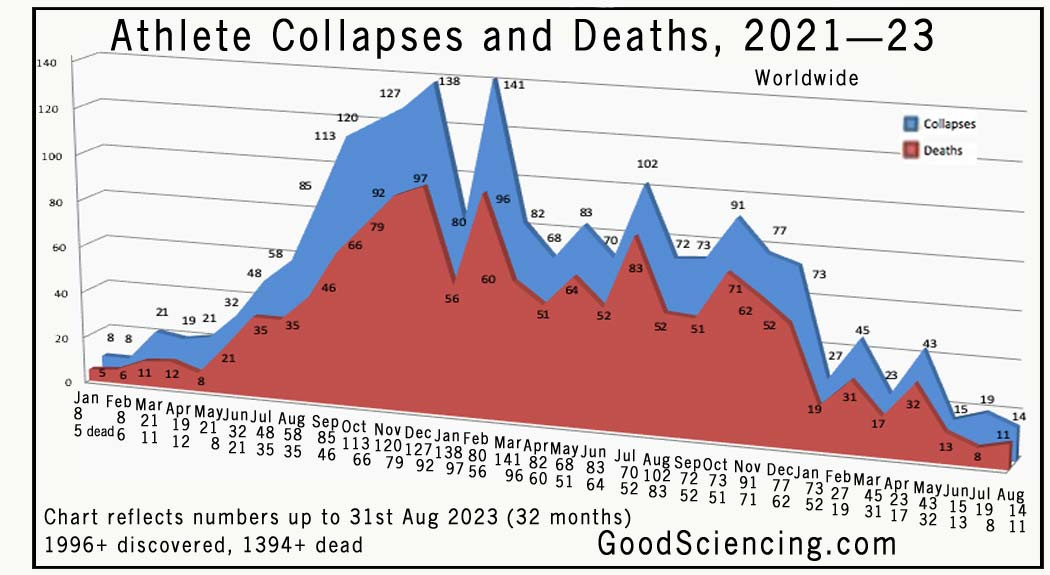
Another graph from Jan. 2023:
But
hundreds of healthy young athletes either had scary “collapses” or
dropped dead of “apparent” heart failures immediately after the
introduction of COVID vax. The graph below starts on Jan 1st 2021, when
Covid “vaccines” were introduced (from Goodsciencing with detailed event descriptions. It appears that they tried to be as transparent with the data and sources:
Estimated Raw Data from news media. Detailed information from GOODSCIENCING
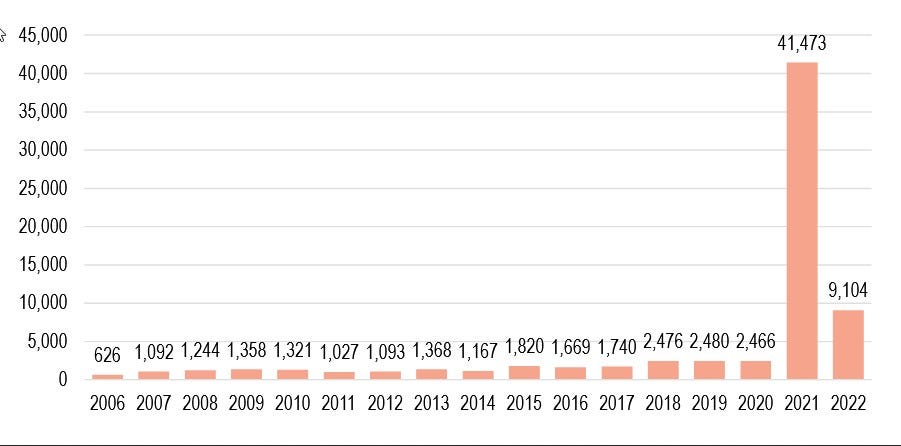
Carditis
and Periocarditis are known Vaccine reactions in VAERS, particularly in
young people. (See below as Florida issued a Covid Vaccine Alert) I
believe that this now somewhat common knowledge. Finally
after everyone in the world lying and denying the possibility of heart
damage and even deaths, Pfizer and Moderna, as of June 2025 are NOW
required to add these words warning of heart problems in these vaccines (Link):
Based
on analyses of commercial health insurance claims data from inpatient
and outpatient settings, the estimated unadjusted incidence of
myocarditis and/or pericarditis during the period 1 through 7 days
following administration of the 2023-2024 Formula of mRNA COVID-19
vaccines was approximately 8 cases per million doses in individuals 6
months through 64 years of age and approximately 27 cases per million
doses in males 12 through 24 years of age.
Follow-up
information on cardiovascular outcomes in hospitalized patients who had
been diagnosed with COVID-19 vaccine-associated myocarditis is available
from a longitudinal retrospective observational study. Most of these
patients had received a two-dose primary series of an mRNA COVID-19
vaccine prior to their diagnosis. In this study, at a median follow-up
of approximately 5 months post-vaccination, persistence of abnormal
cardiac magnetic resonance imaging (CMR) findings that are a marker for
myocardial injury was common. The clinical and prognostic significance
of these CMR findings is not known.
Four years of DENIALS, DENIALS, DENIALS!! LYING and more LYING!! Not a care about real health concerns for our young people from Big Pharma, Big Govt, Fauci or ANYONE ELSE for YEARS!!
Must Read: J.H. Kunstler’s “Huge Crimes Against our Country”—We Know What You Did
“We
know what you did. You engineered and patented a gain-of-function virus
at the same time you conspired with pharma companies to devise and
patent pseudo-vaccines, and then you loosed both of them on the public.
You
didn’t just fail to adequately test the “vaccines” cooked up by
Moderna, Pfizer, and Johnson & Johnson, but you deliberately botched
the trails and lied about it.
You created rich $$ incentives for hospitals to mis-treat Covid patients by failing to use known, safe, effective anti-virals.
You
conspired with social and news media to suppress information about
those common anti-viral drugs that would have informed many patient’s
decisions and saved (100's of) thousands of lives.
You treated
late-stage patients dying of Covid-induced vascular disorder with the
ineffective and toxic drug remdesivir that Dr. Fauci had developed
unsuccessfully for an ebola outbreak years ago. (Nurses turned so
cynical about the remdesivir protocol that they nicknamed it
“run-death-is-near.”)
You prompted government officials to
lockdown society, force useless masking, and now to coerce “vaccination”
by threatening to deprive citizens of their livelihoods.”
The Utter Fraudulence of Anthony Fauci & Co. from Tucker Carlson:
Fox News’ Tucker Carlson ripped “the utter fraudulence of Tony Fauci” Wednesday
night, after BuzzFeed and the Washington Post obtained thousands of
pages of emails through a Freedom of Information Act (FOIA) request,
revealing that the nation’s top virologist was telling
the public one thing, while furiously working on damage control and
narrative-shaping as the COVID-19 pandemic unfolded.
According
to Carlson, Americans assumed “that the man in charge of protecting the
US from COVID must be rational and impressive,” adding “We also assumed
he must be honest. But we were wrong.”
“It soon
became clear that Tony Fauci was just another sleazy federal bureaucrat -
deeply political and often dishonest. More shocking than that we then
learned that Fauci himself was implicated in the very pandemic he’d been
charged with fighting.”
“Fauci supported the grotesque and dangerous experiments that appeared to have made COVID possible.”
Fauci’s
emails collectively show that “from the beginning, Tony Fauci was
worried that the public might conclude COVID had originated at the Wuhan
Institute of Virology.”
“Why would he be concerned
that Americans would conclude that?” Tucker asked. “Possibly because
Tony Fauci knew that he had funded gain-of-function experiments at that
very same laboratory.”
“The emails prove that Fauci lied about this under oath,” said Tucker
17,000 Medical Professionals Demand A Return to Scientific Integrity
These professionals request the following steps to regain scientific integrity:
We declare and the data confirm that the COVID-19 experimental genetic therapy injections must end.
We declare doctors should not be blocked from providing life-saving medical treatment.
We
declare the state of national emergency, which facilitates corruption
and extends the pandemic, should be immediately terminated.
We declare medical privacy should never again be violated, and all travel and social restrictions must cease.
We
declare masks are not and have never been effective protection against
an airborne respiratory virus in the community setting.
We declare funding and research must be established for vaccination damage, death and suffering.
We
declare no opportunity should be denied, including education, career,
military service or medical treatment, over unwillingness to take an
injection.
We declare that first
amendment violations and medical censorship by government, technology
and media companies should cease, and the Bill of Rights be upheld.
We
declare that Pfizer, Moderna, BioNTech, Janssen, Astra Zeneca, and
their enablers, withheld and willfully omitted safety and effectiveness
information from patients and physicians, and should be immediately
indicted for fraud.
We declare government and medical agencies must be held accountable.
And the same group went further in January 2024 (after learning even more about the lies and cover-ups):
After
three years of scientific research, millions of patients treated,
hundreds of clinical trials performed and scientific data shared, we
have demonstrated and documented our success in understanding and
combating the COVID-19 orchestrated crisis. In considering the risks
versus benefits of major policy decisions, our coalition of 17,000
physicians and medical scientists from all over the world have reached
the following, updated consensus:
We
declare, and the data confirm that COVID-19 experimental genetic therapy
injections must end. All COVID-19 and other modified mRNA “vaccines”
must be immediately discontinued. We demand Covid-19 “vaccines’ be
removed from the CDC pediatric vaccine schedule.
We declare these products meet definition of gene therapies, and the FDA has refused to regulate them as such.
We declare physicians should never be blocked from providing any necessary medical treatment.
We
declare the emergency use authorization, that is allowing yet another
untested version of the “vaccine” to be administered without formal
regulatory approval, should be immediately terminated.
We declare the governing bodies of the world should have their emergency powers limited in both time and scope.
We
declare medical privacy should never again be violated, and all travel,
religious and social restrictions must never be repeated.
We
declare masks are not, nor have ever been, effective protection against
an airborne respiratory virus and should never again be mandated.
We
declare injury from COVID-19 “vaccines” must be recognized.
Compensation must be provided for those injured by these injections.
Funding must be allocated to the study of these syndromes and the
development of diagnostics and treatments should be pursued.
We
declare no individual’s economic, educational, military or employment
opportunity should be denied over accepting or declining a medical
intervention. Medical freedom and informed consent are essential human
rights.
We declare free speech
violations and medical censorship by governments, technology/media
companies, governing medical bodies, academia, hospital systems, and the
medical industrial complex should cease, and fundamental individual
human rights be forever upheld.
We
declare Pfizer, Moderna, BioNTech, Janssen, Astra Zeneca studies were
severely flawed, and they withheld safety and efficacy information from
patients and physicians. They should face legal consequences for their
dereliction of scientific duty which resulted in countless unnecessary
disability and deaths.
We declare
governments, media, global regulatory bodies, and medical agencies, such
as CDC, FDA, NIH, NIAID, MHRA, NHS, TGA, SAPRA etc, and unelected
international bodies including but not limited to WHO, WEF, UN, GAVI,
and EcoHealth Alliance must be held accountable for mandating policies
and procedures, and directing funding for reckless gain of function
research that resulted in massive harms.
Amen to this!
Florida’s Florida’s Surgeon General Issues Vax Advisory
“The
State Surgeon General is notifying the health care sector and public of
a substantial increase in Vaccine Adverse Event Reporting System
(VAERS) reports from Florida after the COVID-19 vaccine rollout.
In
Florida alone, there was a 1,700% increase in VAERS reports after the
release of the COVID-19 vaccine, compared to an increase of 400% in
overall vaccine administration for the same time period (Figure 1).
The
reporting of life-threatening conditions increased over 4,400%. This is
a novel increase and was not seen during the 2009 H1N1 vaccination
campaign. There is a need for additional unbiased research to better
understand the COVID-19 vaccines’ short- and long-term effects.
State of Florida’s Alarming rise of Adverse “Vaccine” Reactions
Fauci Lied About Hydroxychloroquine, Azithromycin, Zinc and Vitamin D Cocktail Too
First
of all, he lied about the “gain of function” research that HE HIMSELF
knew about, but he also failed to support the Covid treatment cocktail
of Hydroxychloroquine/Azithromycin/Zinc as being reasonably effective in
many, many studies, especially for early treatment and even prophylaxis
treatments.
For a terrific summary of all the studies about Hydroxychloroquine, have a look at this website: Hydroxychlorquine for Covid-19.
It’s really comprehensive and it summarizes 305 studies now. Most
studies show effectiveness, especially early use, even though most
didn’t study the full cocktail of Zinc, Vitamin C, Vitamin D, Azithromycin and Hydroxychloroquine. That full cocktail was what Trump was advocating.
Why did he lie about Hydroxychloroquine?? Why did he approve Gilead’s Remdesivir almost immediately instead?
Have any journalists asked Fauci about how many shares of Gilead stock he holds?? Of course not, because we
have the dumbest, wokest (another word for dumb) journalists
propagandists who are integral to our country’s lie-machine: DNC, CIA,
Deep State Controlled Media Outlets who protect the corrupt people in
our government ---and worked to punish Donald Trump!!
Even after only small improvements in mortality and hospital stays, Dr. Fauci and the FDA immediately made Remdesivir the “standard of care” on April 29th ignoring
the large number (92 studies--at that time-- a year ago) of quite
positive HCQ cocktail results and it’s very low cost. The “standard of
care” announcement guarantees the expensive Remdesivir is used first
across the nation. The US government was immediately obligated to buy
that drug at $3200 for a course of treatment. The cost of the
hydroxychloroquine cocktail is less than $100. Remember, nearly all of
the NIH executive staff hold Gilead stock.
It’s
almost seems as if Dr. Fauci, the FDA and the National Institute of
Health were all influenced by big moneyed lobbyists or big-moneyed
Pharmaceutical companies? Also, maybe they were influenced by the
possibililty of under-the-table kickbacks, plus rocketing Gilead share
prices to benefit all those people with Gilead shares to allow Gilead to
make $Billions??? Who would have thunk it??
Ron Paul: You Were Scammed: Covid Lies from Deborah Birx
Deborah
Brix, the principal architect of the disastrous “lockdown” policy that
destroyed more lives than Covid itself. Birx knew that locking a country
down in response to a virus was a radical move that would never be
endorsed. So, as she admits in her new book, so she lied about it.
She
sold the White House on the out-of-thin-air “fifteen days to slow the
spread” all the while knowing there was no evidence it would do any such
thing. As she wrote in her new book, Silent Invasion, “I
didn’t have the numbers in front of me yet to make the case for
extending it longer, but I had two weeks to get them.”
She
was playing for time with no evidence. As it turns out, she was also
destroying the lives of millions of Americans. The hysteria she created
led to countless businesses destroyed, countless suicides, major
depressions, drug and alcohol addictions. It led to countless deaths due
to delays in treatment for other diseases. It may turn out to be the
most deadly mistake in medical history.
As she revealed in her book, she actually wanted to isolate every single person in the United States!
Writing about how many people would be allowed to gather, she said: “If
I pushed for zero (which was actually what I wanted and what was
required), this would have been interpreted as a ‘lockdown’—the
perception we were all working so hard to avoid.”
She
wanted to prevent even two people from meeting. How is it possible that
someone like this came to gain so much power over our lives? One virus
and we suddenly become Communist China?
Last week in a Fox News interview she again revealed the extent of her treachery. After months of relentlessly demanding that all Americans get the Covid shots, she revealed that the “vaccines” were not vaccines at all!
“I knew these vaccines were not going to protect against infection,” she told Fox. “And
I think we overplayed the vaccines. And it made people then worry that
it’s not going to protect against severe disease and hospitalization.”
So
when did she know this? Did she know it when she told ABC in late 2020
that “this is one of the most highly-effective vaccines we have in our
infectious disease arsenal. And so that’s why I’m very enthusiastic
about the vaccine”?
If she knew all along that the “vaccines” were
not vaccines, why didn’t she tell us? Because, as she admits in her
book, she believes it’s just fine to lie to people in order to get them
to do what she wants.
She admits that she employed “subterfuge” against her boss – President Donald Trump
– to implement Covid policies he opposed. So it should be no surprise
that she lied to the American people about the efficacy of the Covid
shots.
The Lab Leak Theory Now Fully Accepted by Trump White House
“The
Proximal Origin of SARS-CoV-2” publication — which was used repeatedly
by public health officials and the media to discredit the lab leak
theory — was prompted by Dr. Fauci to push the preferred narrative that
COVID-19 originated in nature.
GAIN-OF-FUNCTION RESEARCH:
A
lab-related incident involving gain-of-function research is the most
likely the origin of COVID-19. Current government mechanisms for
overseeing this dangerous gain-of-function research are incomplete,
severely convoluted, and lack global applicability.
ECOHEALTH ALLIANCE INC. (ECOHEALTH):
EcoHealth
— under the leadership of Dr. Peter Daszak — used U.S. taxpayer dollars
to facilitate dangerous gain-of-function research in Wuhan, China.
After the Select Subcommittee released evidence of EcoHealth violating
the terms of its National Institutes of Health (NIH) grant, the U.S.
Department of Health and Human Services (HHS) commenced official
debarment proceedings and suspended all funding to EcoHealth.
New
evidence also shows that the Department of Justice (DOJ) has opened an
investigation into EcoHealth’s pandemic-era activities.
NIH FAILURES:
NIH’s
procedures for funding and overseeing potentially dangerous research
are deficient, unreliable, and pose a serious threat to both public
health and national security. Further, NIH fostered an environment that
promoted evading federal record keeping laws — as seen through the
actions of Dr. David Morens and “FOIA Lady” Marge Moore.
HHS OBSTRUCTION:
The
Biden Administration’s HHS engaged in a multi-year campaign of delay,
confusion, and non-responsiveness in an attempt to obstruct the Select
Subcommittee’s investigation and hide evidence that could incriminate or
embarrass senior public health officials. It appears that HHS even
intentionally under-resourced its component that responds to legislative
oversight requests.
ECOHEALTH OBSTRUCTION:
EcoHealth
President Dr. Peter Daszak obstructed the Select Subcommittee’s
investigation by providing publicly available information, instructing
his staff to reduce the scope and pace of productions, and doctoring
documents before releasing them to the public. Further, Dr. Daszak
provided false statements to Congress.
DR. DAVID MORENS:
Dr.
Fauci’s Senior Advisor, Dr. David Morens, deliberately obstructed the
Select Subcommittee’s investigation, likely lied to Congress on multiple
occasions, unlawfully deleted federal COVID-19 records, and shared
nonpublic information about NIH grant processes with EcoHealth President
Dr. Peter Daszak.
NEW YORK OBSTRUCTION:
New
York’s Executive Chamber — led presently by Governor Kathy Hochul —
redacted documents, offered numerous illegitimate privilege claims, and
withheld thousands of documents without an apparent legal basis to
obstruct the Select Subcommittee’s investigation into former Governor
Cuomo’s pandemic-era failures.
WORLD HEALTH ORGANIZATION (WHO):
The
WHO’s response to the COVID-19 pandemic was an abject failure because
it caved to pressure from the Chinese Communist Party and placed China’s
political interests ahead of its international duties. Further, the
WHO’s newest effort to solve the problems exacerbated by the COVID-19
pandemic — via a “Pandemic Treaty” — may harm the United States.
SOCIAL DISTANCING:
The
“6 feet apart” social distancing recommendation — which shut down
schools and small business across the country — was arbitrary and not
based on science. During closed door testimony, Dr. Fauci testified that
the guidance “sort of just appeared.”
MASK MANDATES:
There
was no conclusive evidence that masks effectively protected Americans
from COVID-19. Public health officials flipped-flopped on the efficacy
of masks without providing Americans scientific data — causing a massive
uptick in public distrust.
LOCKDOWNS:
Prolonged
lockdowns caused immeasurable harm to not only the American economy,
but also to the mental and physical health of Americans, with a
particularly negative effect on younger citizens. Rather than
prioritizing the protection of the most vulnerable populations, federal
and state government policies forced millions of Americans to forgo
crucial elements of a healthy and financially sound life.
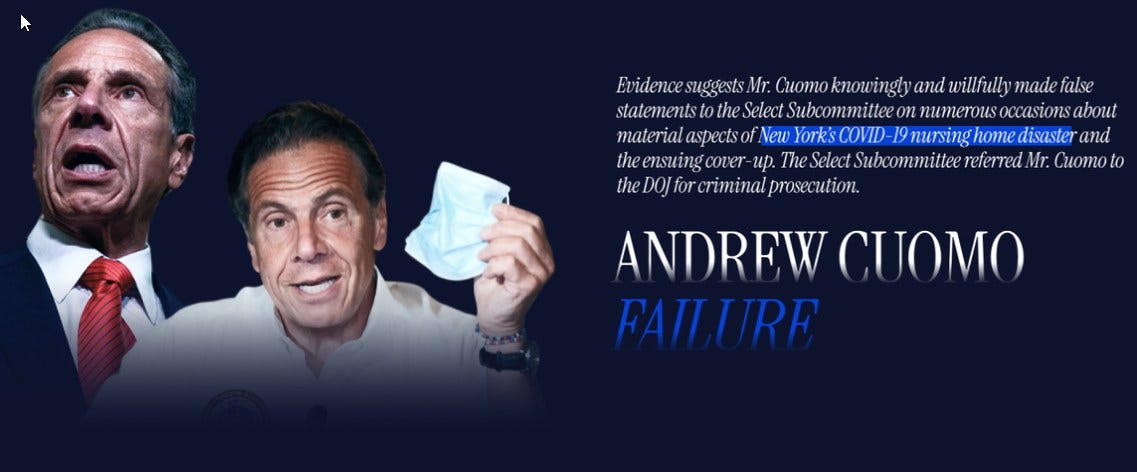
NEW YORK PANDEMIC FAILURES:
Former
New York Governor Andrew Cuomo’s March 25 Order — which forced nursing
homes to accept COVID-19 positive patients — “was medical malpractice.”
Evidence shows that Mr. Cuomo and his Administration worked to cover up
the tragic aftermath of their policy decisions in an apparent effort to
shield themselves from accountability.
COVID-19 MISINFORMATION:
Public
health officials often mislead the American people through conflicting
messaging, knee-jerk reactions, and a lack of transparency. Most
egregiously, the federal government demonized alternative treatments and
disfavored narratives, such as the lab leak theory, in a shameful
effort to coerce and control the American people’s health decisions.
When
those efforts failed, the Biden Administration resorted to “outright
censorship—coercing and colluding with the world’s largest social media
companies to censor all COVID-19-related dissent.”
Cardiologist: Heart Disease in Vaxxed Children Is Worse Than Covid By Far
Dr. Peter McCullough, a top cardiologist in his field, has warned that myocarditis due to the vaccine is “way more serious”
than myocarditis contracted from the virus itself. Myocarditis, or
heart muscle inflammation, is a side effect of both COVID and the mRNA
vaccine. The difference is that the ailment produced by the natural
infection tends to elevate troponin levels, according to Dr. McCullough,
which is a protein found in cardiac and skeletal muscle. “[T]he
myocarditis in COVID-19 is mild, it’s inconsequential, and it’s largely a
component of election [of troponin].”
In contrast,
contracting the ailment through the vaccine may cause lipid
nanoparticles to go directly to the heart, the doctor stated. “The
heart expresses the spike protein, the body attacks the heart. There
are dramatic EKG changes. I don’t want anybody to think that the
myocarditis of a natural infection is anything like what we’re seeing
with the vaccines,” the top cardiologist warned.
Why would anyone demand that children 19 yo and younger get the Covid Vaccine??
Dr.
McCullough said the heart injury due to the vaccine is around 10-100
times higher than the troponin seen in natural infection. Worsening matters, the doctor states that when kids develop myocarditis after the vaccine, 90% require immediate hospitalization to prevent heart failure.
“Vaccine-induced myocarditis is a big deal, and in children, it’s way
more serious and more prominent than a post-COVID myocarditis.”
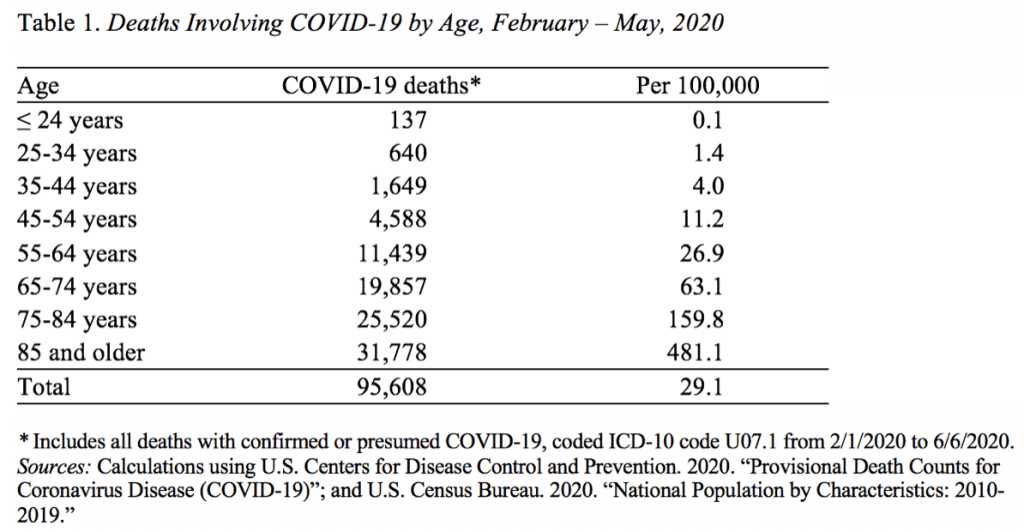
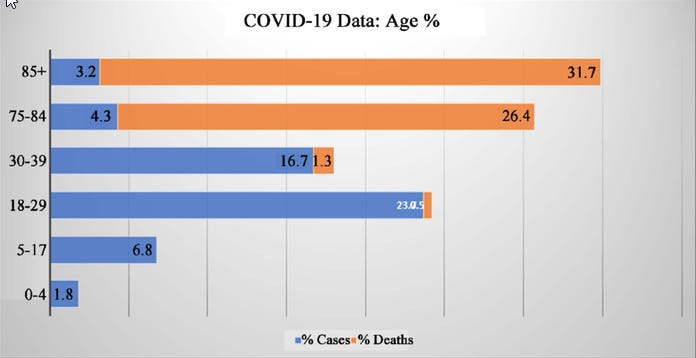
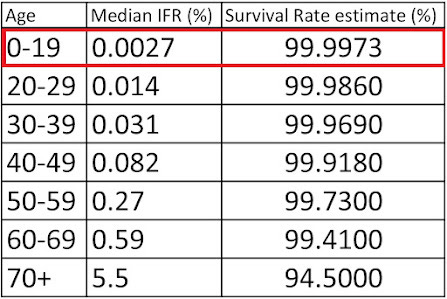
Critical Info Withheld: Average Age of Covid Deaths was 81 to 82 Years Old (Italy and UK)
Covid
was primarily a problem for elderly people. This shouldn’t be a
surprise. Young people were usually only mildly affected.
Covid was only an great threat to obese, and/or sick and/or elderly people. Very elderly people were, by far, most vulnerable.
If you were under 50 years old; Covid was LESS worse than the flu. It
would have been even much EVEN LESS lethal than the Flu in the 0-50
year old group if your weight was normal and had no serious health
problems.
Regarding deaths in Italy from research dated March 2022 via Nature.com:
The median age at death of non-hospitalized patients was 86 years, with 94% of them being ≥ 65 years old (not shown).
Instead, the median age of deceased hospitalized patients was 81 years, with 90% of them ≥ 65 years old (not shown).
More recent average death data from Covid in the UK (from Brightwork Research ) shows the average age of mortality from Covid was 81.5 years (Dated up until Jan 2022):
The Davos - WEF- Corruptocrat Cabal COVID Manipulation Game
The
ten points of the code were given in the section of the judges’ verdict
entitled “Permissible Medical Experiments” at the Nuremberg trials :
from Wikipedia [6]
Since
the Covid “Vaccinations” are indeed experimental, this is a thought
experiment to see how well ‘the community’ exercised it’s ethical codes.
I’ve highlighted violations of this code during Covid in Bold Italics (the only option in Substack)
The voluntary consent of the human subject is absolutely essential. This means that the
person involved should have legal capacity to give consent; should be
so situated as to be able to exercise free power of choice, without the
intervention of any element of force, fraud, deceit, duress,
overreaching, or other ulterior form of constraint or coercion;
and should have sufficient knowledge and comprehension of the elements
of the subject matter involved as to enable him to make an understanding
and enlightened decision. This latter element requires that before the
acceptance of an affirmative decision by the experimental subject there
should be made known to him the nature, duration, and purpose of the
experiment; the method and means by which it is to be conducted; all
inconveniences and hazards reasonably to be expected; and the effects
upon his health or person which may possibly come from his participation
in the experiment. The duty and responsibility for ascertaining the
quality of the consent rests upon each individual who initiates,
directs, or engages in the experiment. It is a personal duty and
responsibility which may not be delegated to another with impunity.[13]
The
experiment should be such as to yield fruitful results for the good of
society, unprocurable by other methods or means of study, and not random
and unnecessary in nature.
The experiment
should be so designed and based on the results of animal experimentation
and a knowledge of the natural history of the disease or other problem
under study that the anticipated results will justify the performance of
the experiment. (N.B. it was known to Pfizer during initial trials of
deadly and serious side-effects of the “vax.”)
The experiment should be so conducted as to avoid all unnecessary physical and mental suffering and injury.
No
experiment should be conducted where there is an a priori reason to
believe that death or disabling injury will occur; except, perhaps, in
those experiments where the experimental physicians also serve as
subjects. (N.B. it was known to Pfizer during initial trials of deadly
and serious side-effects of the “vax.”)
The degree of risk to be taken should never exceed that determined by the humanitarian importance of the problem to be solved by the experiment.
Proper
preparations should be made and adequate facilities provided to protect
the experimental subject against even remote possibilities of injury,
disability, or death.
The experiment should be conducted
only by scientifically qualified persons. The highest degree of skill
and care should be required through all stages of the experiment of
those who conduct or engage in the experiment.
During the course of the experiment the human subject should be at liberty to bring the experiment to an end if he has reached the physical or mental state where continuation of the experiment seems to him to be impossible.
During
the course of the experiment the scientist in charge must be prepared
to terminate the experiment at any stage, if he has probable cause to
believe, in the exercise of the good faith, superior skill and careful
judgment required of him that a continuation of the experiment is likely
to result in injury, disability, or death to the experimental subject.
Click for Gigantic Image Showing How Rape Prosecutions in the UK Dropped to Basically NOTHING
[Forward by Doug: All this
because soft-on-crime feminists and “limp-wrist” weak men in governments
apparently had nothing to do, so they embarked on a truly disastrous
and horrifying project of bringing barbaric, “rapey,” even murderous
MUSLIM immigrants to “enrich” their country. It’s so insane, that I
can’t understand this extreme ignorance. Worse, now the evidence of
their massive and HORRIFYING errors are as plain as could be, they CAN
NOT or WILL NOT do the thing that is necessary—which is to remigrate ALL
of these people!!
I think they must hate themselves.
The
utter stupidity and diabolic self-loathing politicians, who are
apparently and completely ignorant of the “dark age” in Southern Europe
from 700 AD CAUSED by these same murdering, raping, pillaging Muslim
Barbarian hoards (until kicked out of Europe by year 1492). Worse,
these same people and politicians, who REMAIN just as ignorant failing
to see that the Muslim Invader countries of origin are STILL SHITHOLES
after a 1000 years of history!!
Yes, it’s THAT bad.
Disastrous
decade after decade, no one can say the truth that ALL OF THESE PEOPLE,
FROM HORRIFYING, YES—MUSLIM SHITHOLES; MOST OF THEM ON GOVERMENT
WELFARE IN N. EUROPE, SHOULD HAVE BEEN DEPORTED BACK TO THE SHIT-HOLES
THAT THEY CAME FROM —YEARS AND DECADES AGO!
There is no sin in
being wrong, but pure evil is revealed when people are unable to
change/adjust to LONG-STANDING, horrifying evidence of their populations
suffering and dying! They have destroyed their countries!! In another
time, heads should have literally rolled.]
It
is widely known that foreign-born rapists and criminals avoid
accountability in Europe because political leaders are consumed with
fear of being labelled racists.
The new British Rape Gang Inquiry Report by Rupert Lowe MP
reveals shocking figures: around 250,000 white working-class British
girls were raped by non-Western Muslim men over the course of decades,
without the authorities—who were aware of this—taking no action. Read
below the horrifying rape statistics for Scandinavia with non-Western
perpetrators.
In the name of
multiculturalism, officials feared the media’s accusations of racism and
Islamophobia so much that they failed to help these British girls. This
is one of the very worst scandals of our lifetime, now coming to light
in all its horrific horror.
For decades, Marxist-socialist indoctrination
has ingrained into Europeans that one should always excuse and feel
sorry for non-Western immigrants since they come from non-functional,
often highly corrupt states in poor parts of the world.
The Marxist left has thereby implemented a multicultural discrimination against native Europeans
that demands accountability from indigenous European ethnicities in
ways one would never dream of demanding from a dark-skinned, non-Western
immigrant.
In the authoritarian UK,
this discrimination against indigenous Brits are demonstrated as
British individuals now are thrown into prison for social media comments
that are negative towards mass immigration from non-Western countries,
while foreign born rapists and killers are almost excused in court.
Mainstream
media such as the BBC has astonishingly enough not published any
comments on this horrid Gang Rape Report and the massive racism against
whites in Britain that it demonstrates, writes historian,
bestselling author and founder of The Herland Report, Hanne Nabintu
Herland. The article was first published in her regular WND column.
Then there is Scandinavia
In Norway,
one of the few reports that published the ethnicities of criminals
showed that 100% of assault rapes were done by non-Western immigrants.
Imm
igrants from Asia, Africa, South and Central
America, and Turkey have much higher crime rates than the general
population, with the worst being from Africa. In Sweden, a recent study showed 96% committed by immigrants. In both cases, almost exclusively native, white women were raped. In Denmark, non-Western immigrants are over seven times more likely to be convicted of rape than native Danes.
Sweden
is notoriously lost to its Marxist politicians, who simply do not stop
the violence against its indigenous population. The country has almost
sixty “no-go zones” ruled by immigrant gangs where the police are not
allowed; the city of Malmø has over 50% non-Western immigrants with a higher crime rate index than Baghdad; Sweden has the highest number of bombings for a country not at war.
According to a recent study, 96% of assault rapes in Sweden are committed by foreign-born immigrants, and ethnic Swedish women are the ones raped. A 2018 investigation found that 40 out of 43 men convicted of gang rape were either immigrants or born to immigrant parents. Sweden has had the highest number of registered rape offenses in Europe by a considerable extent.
This
Marxist-socialist discrimination is the opposite of the historical
Western ideal of equality regardless of race, creed, or social standing.
It has produced the racism against white Europeans that today permeates European mainstream media and public discourse.
In 1977, Sweden had 689 rapes reported. In 2015, 18,100 sexual offenses were reported, again almost solely perpetrated against ethnic Swedes. Still, Swedish politicians do not stop it, and mainstream media is silent out of fear of being labelled racist.
Norway’s numbers indicate
that remarkably few individuals are convicted of rape. Only one in 10
reports of sexual violence are filed, and about 80 percent are simply
dropped. In Sweden, out of 4,895 reported rape cases in 2017, only 190 led to convictions. In Norway, only one in 10 produces a conviction. Statistics also show that one in five Norwegian girls under 15 years of age is exposed to sexual violence. Sweden does not publish official crime data linked to ethnicity or immigration status, nor does Norway.
Very few discuss the internally reported suicides by white girls post-rape as they and their families watch the police act reluctant to pursue perpetrators. It is extremely rare to find individuals willing to speak about this publicly.
In
2025, the Libertarian Progress Party—now the largest political party in
Norway and arguably its version of Reform UK— recently paid for new
research into the crime rate categorized by ethnicities. The statistics showed significant increase in the overrepresentation of immigrants for 2020–2023.
Young
men from Iraq and Somalia have extremely high charge rates, with over
1,200 per 1,000 for immigrants and up to 1,300 for Norwegian-born ethnic
foreigners with parents from these countries. In Oslo,
the Nobel Peace Prize capital of Norway, young men with an immigrant
background have a charge rate of 820 per 1,000, while Norwegian-born to
immigrant parents have a rate of 910 per 1,000. The rest of the
population has a rate of 280 per 1,000.
“For
example, for Somali men in Oslo (aged 15–24), there are 2,120 charges
per 1,000 inhabitants in the period 2020–2023. This is 15 times more
than the population of Oslo without an immigrant background,” writes the
Progress Party.
Denmark
The numbers for Denmark are equally depressing, revealing significant disparities
based on ethnicity. Numbers from 2010–2014 indicate that non-Western
immigrants are massively overrepresented among those convicted of rape
compared to native Danes. This renders non-Western immigrants and their
children 7.3 times more likely to be convicted of rape than native
Danes.
The total lack of protection for indigenous
Scandinavian women from foreign-born immigrant rapists stem from the
Marxist-socialist ideology, which has held Europeans hostage with its
racism against the indigenous white population for so long, allowing
this horrifying abuse of women to continue year after year.
The insane/demented Biden Administration gave 1,300,000 Haitians and
Syrians Temporary Protected Status (TPS) that shielded them from
deportation.
Remember when evil Joe Biden dumped some 30,000
Haitians on this small town of Springfield, Ohio? The town’s was only
about 58,000 — mostly white middle class people.
Suddenly,
deepest, darkest Africa was unleashed upon them by a truly hateful
Democrat regime in Washington. It was almost as if Biden was gleeful to
dump human refuge upon this peaceful, settled town of white persons as
some kind of punishment that they deserved. Democrats really hate White people! Sick and pitiful.
Haiti
is one the most failed nations on Earth and has been for 100’s of
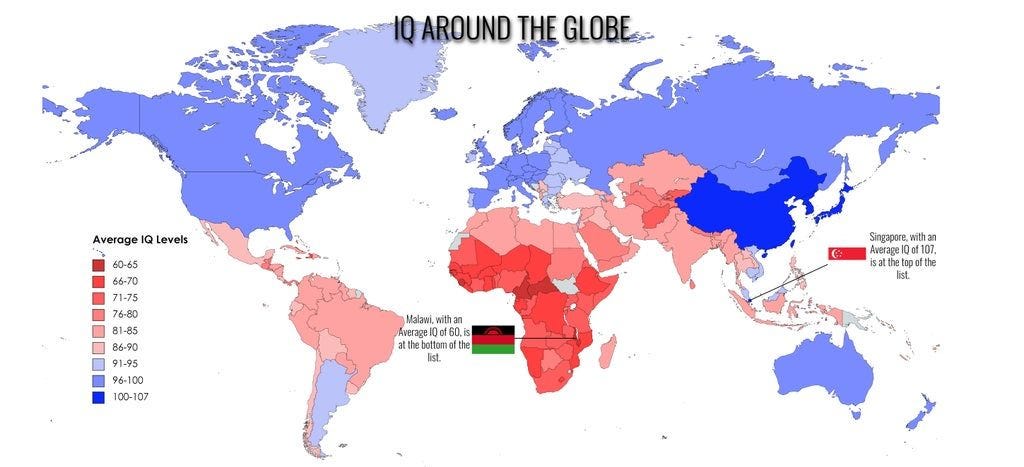
years. They have one of the lowest reported country IQs in the world at
67; right down there with the Congo, Zimbabwe and most of Sub-Saharn
Africa.
These
immigrants were just dumped into Springfield seemingly without
permission or notification. These primatives were reported eating cats
and wild ducks from the local park. CNN and the lying Leftist media
immediated disputed this information that was plain as day to normal
people. And they started driving cars—STRAIGHT INTO OTHER CARS. I
suppose they had Voodoo sessions too? What a total fiasco!
But,
yesterday, the US Supreme Court just ended that protection and forbade
any judiciary from interfering with their deportation if the
administration wishes. This opens the door for the Trump administration
to send 1.3 Million people back to their home country—and nobody can
stop it.
I have more sympathy for Syrians to be honest. I
don’t know where they were dumped. But Syria is a failed state too
thanks to the evil of Islam. Most of the 49 Islamic countries in the
world are failed states. Why is that??
You know why. I’ve covered my extreme distate for Islamism in other
posts.
(Just type“Islam” and “gulfcoastcommentary” in the Firefox
browser. Bing used to give unbiased search results for any and all of
Gulfcoastcommentary peices at first, but now their Globalist Algorithms have caught up with my “forbidden” truth content and search result for this site are completelybanned by Bing and Google. I believe that Firefox is still ok.)
Syria
used to be the cradle of Christian Civilization in 300 AD and
represented the height of Christian culture bfore Islam. Here’s a great
summary of Syria at the height of human, Christian civilization in and
around 300 AD from Wikipedia:
Christianity in Syria has among the oldest Christian communities on Earth, dating back to the first century AD, and has been described as a "cradle of Christianity".[2] With its roots in the traditions of St. Peter and St. Paul the Apostle,
Syria quickly became a major center of early Christianity and produced
many significant theologians and church leaders. Of the 200 bishops who took part in the First Council of Nicaea
in 325 AD, twenty were from Syria. Over the centuries, Syrian
Christians have played a vital role in shaping Christian thought and
practice, contributing to the development of various liturgical
traditions, monastic movements, and theological schools. St. Paul the Apostle famously converted to Christianity on the road to Damascus, and Syria has produced seven Popes.
Now look at Syria. It’s a human and civilizational wasteland.
Syria,
Iraq, Turkey, Greece, Moracco, Egypt, Algeria and many other countries
were all settled, peaceful Christian communities that have been
degradated or entirely ruined by Islam. Iran, once influenced by
Christianity, is now an unspeakably evil place run by murderous Islamic
thugs and those people are a threat to modern civilization.
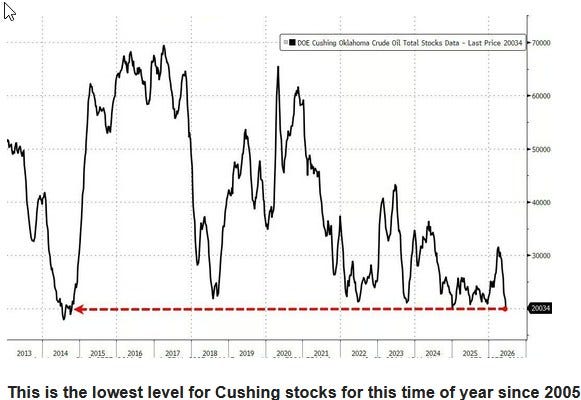
Trump did what he had to do and he’s getting it done. He had to make
a (temporary) “peace” with Islamist thugs in Iran because oil tanks
across the world were alarmingly low. And yes, the Iranians know this.
Still,
president Trump was able to keep the IRGC afraid enough to sign the
so-called Memorandum of Understanding for making peace. I don’t think
“peace” will hold, but it may hold through the mid-term election season.
That said, I would speculate that a resumed war with Iran is
practically guaranteed next year.
A
crude oil price spike was becoming more likely as oil storage levels
declined. Increasing inflation in the US could threaten the US stock
(and bond) markets if oil prices spiked higher.
But instead, oil prices are collapsing, responding just as Trump hoped.
US Military Munitions Stockpiles are Significantly Depleted
The US munitions stockpiles have been significantly depleted. Trump is addressing this as we speak:
From Zerohedge, President Trump has also called for greatly increased munitions funding:
The
Trump administration is seeking a major increase in defense spending
while simultaneously using executive authority to accelerate weapons
production, reflecting growing concern over U.S. munitions inventories
after the war with Iran, according to NBC.
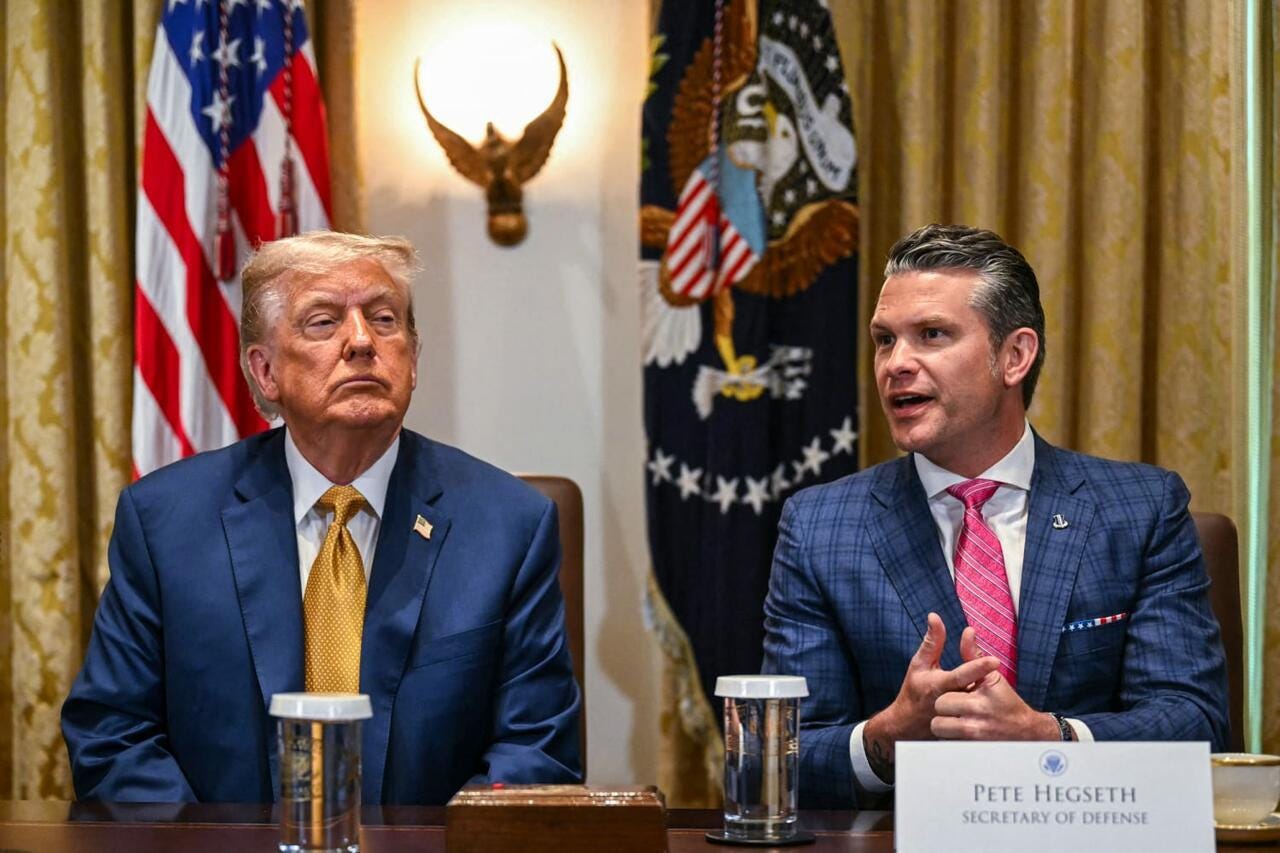
Defense
Secretary Pete Hegseth met with Senate Republicans this week to rally
support for a proposed $350 billion defense package, much of which would
be directed toward replenishing missile and weapons stockpiles.
According to NBC, Sen.
John Cornyn said the Pentagon is “running short of funding they need in
order to acquire the weapons and missiles and things like that that
they need to protect the nation.”
And Then There’s the Midterms
Politically,
Trump had to temporarily end hostilities due the approaching mid-term
election season. I don’t need to add much more as this is an obvious
imperative.
But mind you, the war against the insane islamists
in Iran is not over. Trump has stirred-up a hornet’s nest. If Islamic
history is any guide, there will be war with America for 500 years now.
The IRGC mafia will teach hate to subsequent generations.
Remember,
Islam literally means “SUBMIT” and Jihad means “STRUGGLE.” That’s how
these Muslim scumbags remain in conflict with the rest of the world for a
THOUSAND years (1400 years to be exact).
Middle-Eastern Oil Export Pipelines Will Likely Be Re-Purposed, Refurbished and New Ones Planned
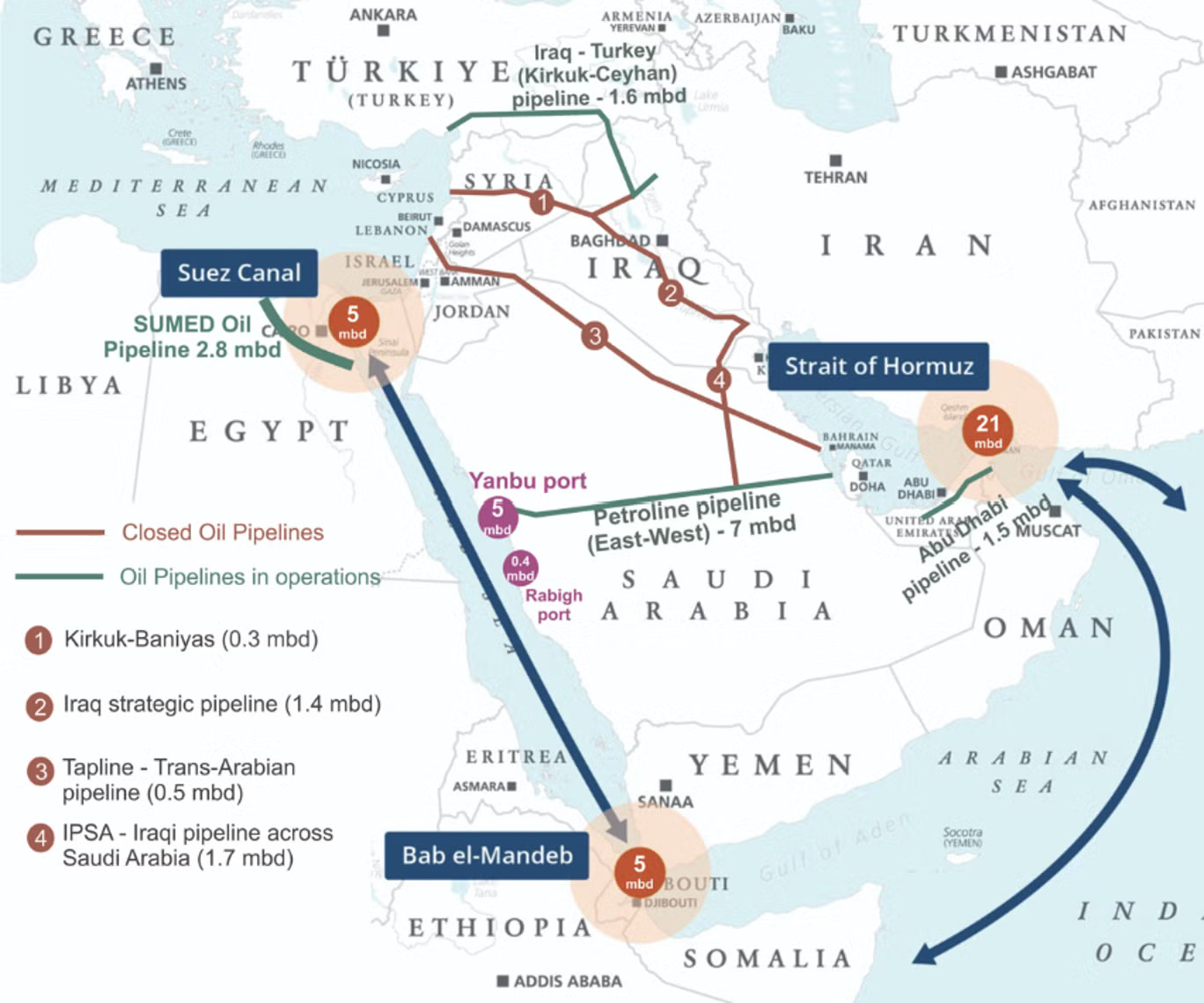
During
the recent shut-down of the Straight of Hormuz, Saudi Arabia was
transporting some 5 to 7 million bbl per day across their country to the
Red Sea port of Yanbu to bypass the Hormuz strait. Also, the UAE was
shipping 1.5 million or so of oil to the port of Fujairah on the Gulf of
Oman, outside Hormuz.
Shown below are existing pipelines,
primarily from Iraq’s southern oil fields that may be utilized to avoid
the Hormuz chokepoint from The Independent UK.
You
can bet that other pipelines will be built soon to the prepare for the
next round of war with Iran. Doubling Saudi’s capacity to ship oil to
Yanbu seems promising. Additional tanker loading facilities on the Red
Sea would also be required.
The existing pipelines in the Middle East (click to enlarge)
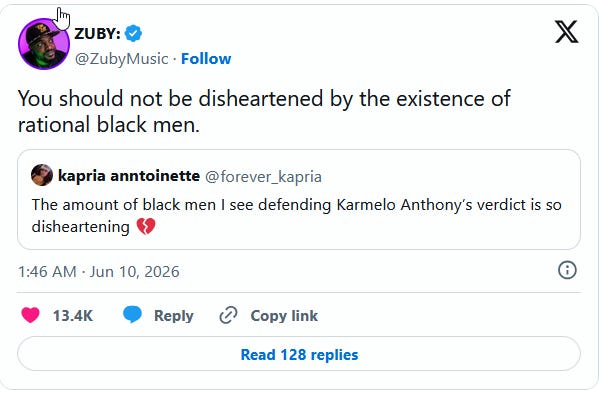
One
of the most interesting thing about the trial was that it had an
all-white jury. The prosecutor interviewed potential black jurists, but
quickly found out how unsuitable they were when they admitted that they
would find it difficult to convict a “brother”regardless of evidence.
So the prosecutor chose the most sane course of action: have an
all-white jury.
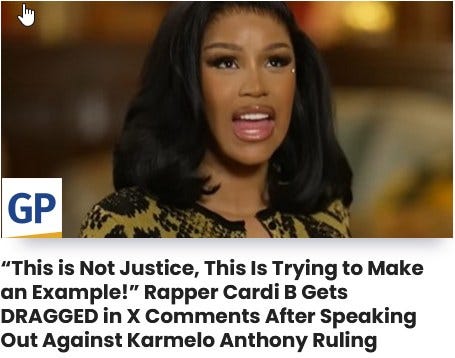
Anthony’s Family Grift
From Gatewaypundit:
Anthony’s GiveSendGo page, which had already surpassed $629,000 by the
time of the guilty verdict, received another $4,000 overnight, with the
total still climbing before the campaign was yanked offline.
The
fundraiser, titled “Help Karmelo Official Fund,” was launched shortly
after Anthony’s arrest. Its stated purpose went well beyond legal
defense.
The page explicitly listed funds for “safe relocation of
the Anthony family due to escalating threats,” basic living costs,
transportation, counseling, and “other security measures.”
By
early June, as the trial got underway, the total had climbed past
$612,000 and continued rising. [Doug here: But was shutdown after a
guilty verdict]
Almost immediately after Anthony made bond last April, the family’s living situation visibly improved.
They
moved into a $900,000 home in a gated community, with rent estimated at
$3,500–$4,000 per month. Neighbors also reported the family acquiring a
new car shortly after the bond release.